



About SMA
SMA (Spinal Muscular Atrophy) is a neuromuscular disease
Did You Know?
1 in 50 carry the
defective SMA gene
- SMA (Spinal Muscular Atrophy) is a neuromuscular disease that takes away the ability to move, walk, eat or breathe without assistance. It is the No. 1 genetic killer of small ones.
Do you know how many babies are born with SMA (Spinal Muscular Atrophy) in Malaysia every year?
An estimated
500,000
babies are born in Malaysia each year.
1 in 10,000
babies is born with SMA (world statistic).
That means about 50 babies are born with SMA every year.
This is almost 1 in a week.
Isn’t that worrying? That’s why SMA is the most common rare disorder.
- Type I: Severe
- Type II: Intermediate
- Type III: Mild
- Type IV
- Delay in meeting motor milestones, or failing to meet milestone entirely.
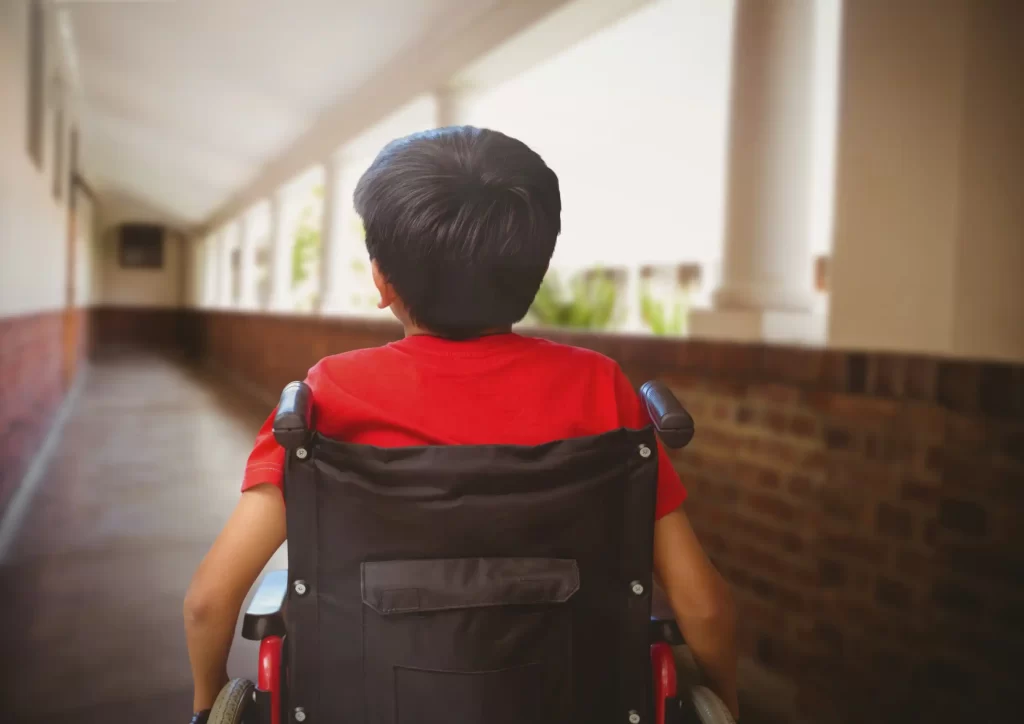
- Can sit up without help or with assistance, but unable to walk and require a wheelchair.
- Children are able to stand and walk initially, but will grow weaker and many need to use a wheelchair.
- Chewing & swallowing may be affected later.
- Late onset, and similar to Type 3, but is less severe.
Know More About SMA
- 1 in 10,000 babies.
- It affects any race or gender.
- 1 in every 50 persons is a genetic carrier of SMA.
- Holding head up
- Rolling over
- Sitting up
- Standing
- Walking
Genetic counselling
Genetic counselling by qualified personnel is advised if there is any family history of the condition or before any genetic testing is done.
Genetic testing
Genetic testing is available to confirm the diagnosis of SMA if there is suspicion of the disease based on physical observation. Carrier testing and genetic counselling are offered for adult family members of an affected patient.
Genetic Testing &
Genetic Counselling
If genetic testing yields a negative result but symptoms typical of SMA are observed, further tests such as muscle biopsy and electromyography may be necessary. Prenatal diagnosis and pre-implementation genetic diagnisus are available for couples who are at risk for having an offspring with SMA.
Frequently Asked Questions
Yes. Due to the way the disease is inherited, it is possible for the defective gene to be present in the family without anyone showing symptoms. Hence, you may not be aware of a family history.
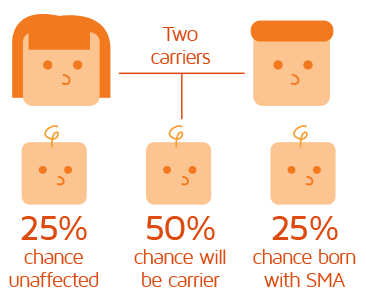
Yes. When both parents are carriers of the gene change, there is a 25% risk with each pregnancy of having a child with SMA. This risk may be reduced by prenatal diagnosis and pre-implantation genetic diagnosis.
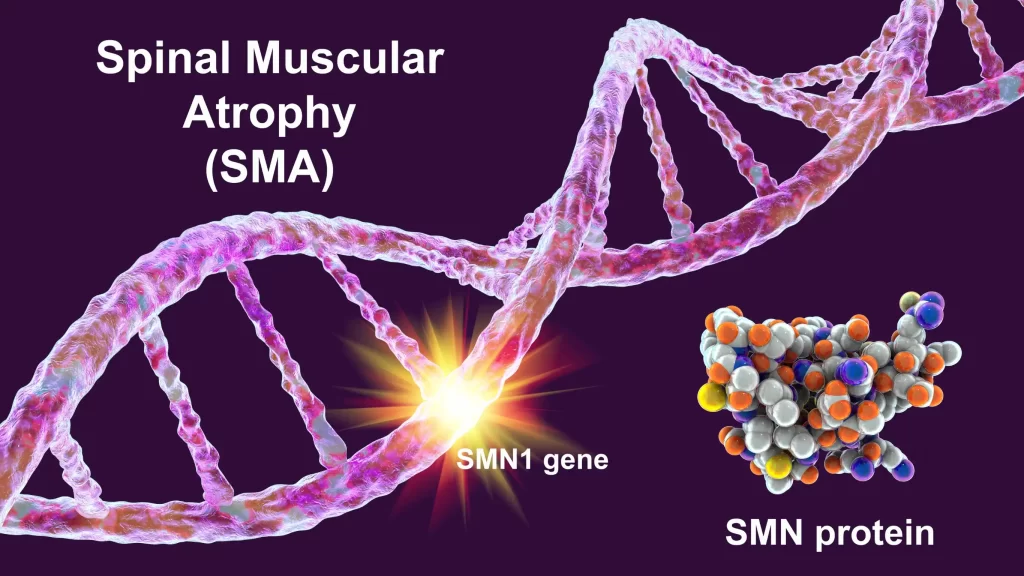
No. Carriers do not show any symptoms of the condition as they have one functioning copy of the gene, which is sufficient for the production of the required amounts of protein.
Yes. Children with milder forms of SMA are highly encouraged to attend school. The condition does not affect the mental development of patients.
Some forms of SMA shorten lifespan. The average lifespan of an SMA patient depends of the age of onset of the condition. The later the age of onset, the higher the likelihood of achieving a normal lifespan. Patients are advised to consult their physician to obtain specific information regarding this.
Weakness of the respiratory muscles is potentially the most serious issue faced by SMA patients. Ventilatory assistance is usually needed to facilitate breathing. Swallowing and chewing muscles may also be affected in some types of SMA. Those facing this difficulty would often require feeding aids.